Sui Gas Connection Transfer & Name Change: SNGPL & SSGC Guide
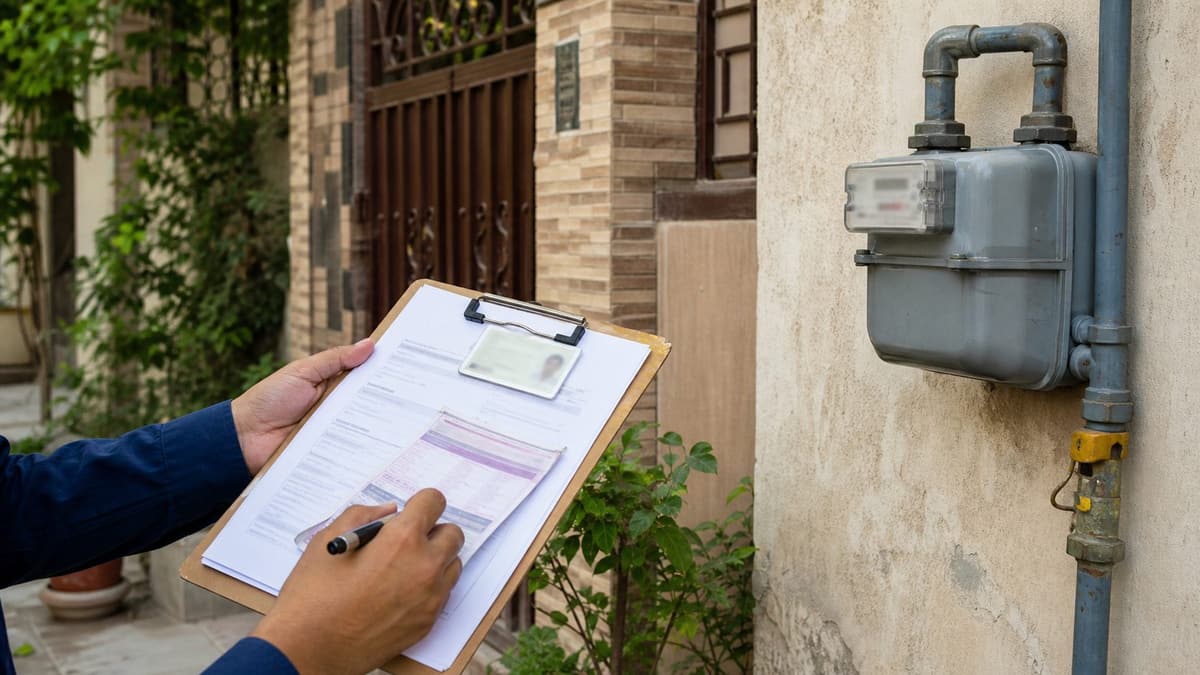
A gas connection usually becomes visible only when something changes: the house is sold, a parent's name is still on the bill, a tenant has moved in, or the spelling on the bill has been wrong for years and suddenly matters for paperwork. That is when a small line on the gas bill starts acting like an official household record.
This guide explains how to handle Sui gas connection transfer and gas bill name change for SNGPL and SSGC consumers. It is written for normal household cases: purchase of property, inheritance, tenancy, joint ownership, and simple name correction. The aim is to help you walk in with the right papers, avoid avoidable delays, and know which claims are actually supported by official company pages.
Source check
Last checked: July 2, 2026. SNGPL has an official transfer/change-name web route and a detailed FAQ. SSGC pages checked for this guide did not show the same dedicated public transfer portal, so the SSGC section is intentionally written as a customer-management or Customer Facilitation Center process.
Quick answer
If the gas bill is still in the previous owner's name, do not ignore it forever. First confirm whether the connection belongs to SNGPL or SSGC, clear old dues, keep the last paid bill, and collect identity plus property documents before applying.
- SNGPL consumers: SNGPL has an official Transfer of Gas Connection / Change of Name route. Its FAQ says transfer is needed for purchase of property, inheritance, and change in tenancy.
- SSGC consumers: Use SSGC customer management, official contact channels, or a Customer Facilitation Center. Take the old bill, CNIC, ownership or tenancy proof, paid bill, and any affidavit or NOC the office asks for.
- Do this before paying anyone: Check whether there are arrears on the old bill. Transfer/name change does not magically clean the consumer account.
For a simple bill lookup before you start, use the relevant duplicate bill page: SNGPL bill check or SSGC bill check. If the latest bill has arrears, late payment surcharge, or previous balance, settle that discussion before you file the transfer case.
Transfer vs name change
People use "name change" for almost everything, but the office may treat cases differently. A connection transfer usually means the active gas connection at the premises should move from the old consumer's name to the present owner, legal heir, or approved occupant. A name correction is usually smaller: wrong spelling, missing part of a name, CNIC alignment, or a record update where ownership itself is not being disputed.
The reason this distinction matters is simple: a transfer case needs stronger proof. If you bought a house, inherited one, or want a tenant route, the company needs enough documents to protect itself from a later ownership dispute. If it is only a spelling correction, the office may still ask for CNIC and bill copy, but the file should not look like a property-sale case.
Practical rule: if the person on the bill and the person asking for change are connected through property sale, inheritance, tenancy, or possession, treat it as a transfer case. If the same person's name is just written incorrectly, ask for name correction requirements.
Before you apply
Do a little homework before opening the form or visiting an office. Most delays happen because the applicant starts with half the file and then has to come back for one missing paper.
- Read the latest bill carefully. Note the consumer number, account ID, billing month, name, address, arrears, due date, and current status.
- Confirm the company. Punjab, Khyber Pakhtunkhwa, Islamabad, and parts of northern Pakistan are generally SNGPL territory. Sindh and Balochistan are generally SSGC territory.
- Clear old dues. SNGPL's own FAQ says dues must be clear before transfer. For SSGC, treat unpaid dues as a likely delay until the office confirms otherwise.
- Match the property address. Your sale deed, transfer letter, fard, allotment letter, tenancy agreement, or society record should connect clearly with the gas meter premises.
- Keep digital copies. If applying online, scan documents clearly. Blurry CNIC images and half-cut bills are an easy way to invite rejection.
If the old bill itself looks wrong, read the gas bill reading guide first so you understand arrears, meter rent, fixed charge, GST, and total amount due before you file a name-change case.
SNGPL process
SNGPL is the cleaner case because its official website has a public transfer/change-name route. On the SNGPL transfer page, the form asks for the present owner consumer number or account ID, the new owner's bio data, CNIC, CNIC issuance date, mobile number, email, and whether the applicant is owner or tenant.
For owners, SNGPL asks for proof of ownership such as registry, transfer letter, fard, stamp paper, or similar property document. It also asks for a signed affidavit, with the official page noting that the affidavit may be submitted on non-judicial stamp paper of Rs. 100/-. For tenants, SNGPL asks for property documents plus NOC from owner and a tenant affidavit.
The most useful details are in SNGPL's FAQ:
- Transfer/change of name is generally needed for purchase of property, inheritance, and change in tenancy.
- All SNGPL dues must be clear before transfer.
- For purchase of property, SNGPL lists application, last paid bill, applicant CNIC, affidavit/undertaking on stamp paper, and property document.
- For inherited property, SNGPL also lists a copy of the death certificate of the consumer.
- SNGPL says there is no fee for transfer of gas connection.
- SNGPL says the connection is transferred till the next billing cycle after submission of the application with required documents.
The same FAQ also says a previous-owner NOC is not mandatory in a property purchase case because SNGPL has relaxed that condition. Do not stretch that sentence into every situation, though. Tenant cases still need landlord NOC, and disputed cases can still require extra scrutiny.
SNGPL transfer on the bill is not proof of ownership or tenancy in any forum. SNGPL's FAQ says this directly. Treat it as a gas connection record, not a property title document.
SSGC process
SSGC needs a more careful explanation because, in the official pages checked for this guide, I did not find a dedicated public transfer/name-change web portal like SNGPL's. That does not mean SSGC consumers cannot request name correction or connection record changes. It means you should use SSGC's official customer-management and Customer Facilitation Center route instead of trusting an unofficial shortcut.
Start with the SSGC customer-management page, official contact channels, or nearest Customer Facilitation Center. SSGC lists CFCs for Karachi, Hyderabad, Nawabshah, Sukkur, Larkana, and Quetta regions. Take documents in physical form and, if possible, keep scanned copies on your phone or email as backup.
Because SSGC's public new-connection application checklist asks for applicant CNIC, ownership documents, landlord NOC for tenants, society or authority NOC where applicable, and undertakings on stamp paper, those same document categories are sensible to prepare for a transfer/name-change discussion. The office may ask for a shorter or different set for your exact case, so let the official counter confirm the final checklist.
For SSGC, I would carry:
- Latest gas bill and last paid bill proof.
- Applicant CNIC copy and original CNIC for verification.
- Ownership document, sale deed, transfer letter, allotment letter, registry, fard, or society record.
- Death certificate and inheritance/succession documents if the old consumer has died.
- Tenancy agreement and landlord NOC if applying as tenant.
- Any affidavit or undertaking the SSGC office asks for.
If an agent claims there is a hidden SSGC online transfer portal, ask them to show the official SSGC domain, not a screenshot or WhatsApp form. Name-change work touches CNIC, property, and billing records. Keep it boring, official, and documented.
Required documents
The exact list depends on company, city, ownership type, and whether the connection is active or disconnected. Still, most household cases revolve around the same documents.
| Document | Why it matters |
|---|---|
| Latest gas bill | Confirms consumer number, account ID, meter premises, old name, and dues. |
| Last paid bill | Shows dues were cleared before transfer/name change. |
| Applicant CNIC | Connects the new record with the person applying. |
| Ownership proof | Can include sale deed, registry, fard, transfer letter, allotment letter, stamp paper, or society record. |
| Affidavit or undertaking | Used to confirm responsibility and reduce dispute risk. SNGPL mentions Rs. 100/- non-judicial stamp paper for affidavit. |
| Landlord NOC | Important for tenant cases. SNGPL's tenant route makes owner NOC mandatory. |
| Death certificate | Needed when the old consumer has died and the case is based on inheritance. |
| Authority or society NOC | Useful where the property sits in a society, apartment project, cantonment, or controlled authority area. |
Keep both originals and copies. Online forms need scans; offices may ask to see originals. If a document is old, faint, or damaged, make a fresh clear copy before submission.
Arrears and paid bills
Arrears are the part people most often underestimate. A buyer may assume "the bill was in the seller's name, so the old balance is not mine." The gas company may see it differently because the consumer account, meter, and premises are still connected.
SNGPL's FAQ is direct: dues must be clear before transfer. For SSGC, clear the old bill or get written guidance from the customer office before assuming transfer can proceed with unpaid dues. If the latest bill shows "arrears", "previous balance", or "late payment surcharge", resolve it before the name-change visit.
You can use the Sui gas bill calculator for a rough bill understanding, but do not use an estimate as proof of payment. For payment channels, read the online payment guide and keep the bank/app receipt, transaction ID, and paid bill screenshot.
Buyer, heir, tenant
The documents change because the relationship to the premises changes. A property buyer, legal heir, and tenant are not the same kind of applicant.
When you bought the house
Keep the sale deed, registry, transfer letter, fard, allotment letter, or society transfer record. SNGPL says previous-owner NOC is not mandatory for purchase of property, but your ownership document still has to make sense. If the address on the property document and gas bill do not clearly match, expect questions.
When the old consumer has died
Keep death certificate, CNIC of applicant/legal heir, property document, last paid bill, and any inheritance or succession paper available. SNGPL lists death certificate specifically for inherited-property transfer. In joint-family houses, decide who will sign and whose name should appear before visiting the office.
When you are a tenant
SNGPL's tenant guidance requires landlord NOC and says the earlier security deposit is not transferred to the tenant. In plain language: the tenant may need to deposit security in their own name. For SSGC, do not assume tenant transfer is automatic. Carry tenancy agreement, landlord CNIC/NOC where available, and ask the CFC what they need for your case.
When it is just spelling correction
For a spelling correction, start with CNIC and latest bill. If the name belongs to the same person but is slightly wrong, tell the office clearly that you need correction, not ownership transfer. If the CNIC name and property record name differ, carry supporting documents so the staff do not have to guess.
Delay or rejection
A transfer/name-change case usually slows down for one of these reasons:
- Outstanding bill is not clear.
- CNIC copy is unreadable or expired.
- Property document does not match the gas bill address.
- Applicant selected the wrong route, such as owner instead of tenant.
- Landlord NOC is missing in a tenant case.
- Death certificate or inheritance support is missing.
- Affidavit is unsigned, undated, or on the wrong stamp paper.
- Mobile number or email is wrong, so follow-up messages are missed.
SNGPL says wrong or incomplete information may lead to cancellation. That is a polite official way of saying: do not submit a half-true form and hope it passes. If your property has a dispute, shared ownership, or old records in multiple names, go slowly and keep copies of whatever you submit.
For a pending SNGPL application, SNGPL says the contract is uploaded on the same link after scrutiny and asks users to check the case status within a week. For broader new-connection tracking, the connection application status guide explains demand notice, survey, rejection, and no-update situations.
After approval
Approval is not the last step. The boring follow-up is what saves headaches later.
- Save the acknowledgement, contract, office receipt, or application number.
- Check the next bill and confirm the name has changed correctly.
- Compare arrears, security deposit, and previous balance carefully.
- If the meter was disconnected, confirm reconnection requirements separately.
- Do not throw away the old bill. It helps connect the old account history with the new record.
SNGPL says security already deposited may be transferred to the present owner in an active connection case. For tenants, SNGPL says the tenant has to deposit security in their own name. If the next bill shows a security adjustment you do not understand, raise the query with the company while the case is fresh.
Official references
Use these official pages before you submit documents or pay anyone:
- SNGPL Transfer of Gas Connection / Change of Name
- SNGPL FAQs for Change of Name
- SSGC Customer Management
- SSGC Customer Facilitation Centers
- SSGC new RLNG domestic connection document checklist
Related reading on this website: RLNG new connection bill, Sui gas bill charges explained, online complaint guide, and gas meter problem guide.
FAQs
How do I transfer an SNGPL gas connection to my name?
Use SNGPL's official Transfer of Gas Connection / Change of Name page or submit the application at an SNGPL regional or sub-regional office. Keep the last paid bill, applicant CNIC, property proof, and affidavit or undertaking ready.
What documents are required for SNGPL transfer/name change?
SNGPL's FAQ lists application from the present owner, copy of last paid bill, CNIC copy, affidavit/undertaking on stamp paper, and property document such as transfer letter, registry, fard, or stamp paper. For inheritance, SNGPL also lists death certificate.
Does SNGPL charge a transfer fee?
SNGPL's official FAQ says there is no fee for transfer of gas connection. Still, dues must be clear, stamp paper may be needed for the affidavit, and tenant security deposit treatment can differ.
How long does SNGPL transfer take?
SNGPL's FAQ says that after submission of application with required documents, the connection is transferred till the next billing cycle. Treat that as official guidance, not a guarantee for disputed or incomplete cases.
How do I change the name on an SSGC gas bill?
Use SSGC customer management, official contact channels, or a Customer Facilitation Center. Carry the latest gas bill, paid bill proof, CNIC, ownership or tenancy documents, and any NOC, affidavit, or undertaking requested by SSGC.
Can a tenant transfer a gas connection to their name?
SNGPL's tenant route requires property documents, landlord NOC, and tenant affidavit, and the earlier security deposit is not transferred to the tenant. For SSGC, confirm at the official customer office before assuming the same treatment.
Does name change remove old arrears?
No. Do not treat transfer/name change as a way to wipe old dues. SNGPL's FAQ says dues must be clear before transfer, and for SSGC you should clear or formally resolve arrears before submitting the case.