Gas Prices Went Down? Why Your Sui Gas Bill Did Not Drop
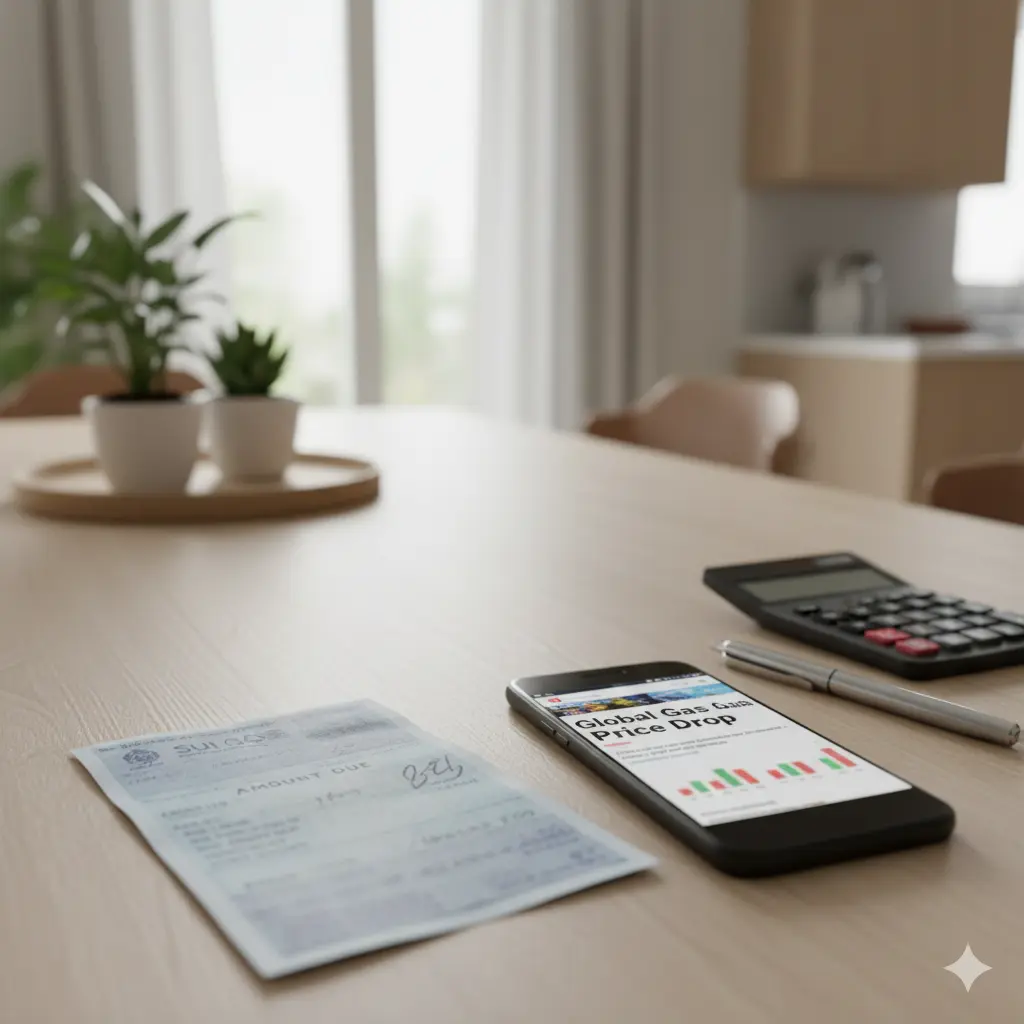
If you saw a headline saying gas prices went down, then opened your SNGPL or SSGC bill and saw no relief, you are not imagining things. Gas pricing in Pakistan has layers. A price cut in one layer does not always reduce the amount printed on your household bill.
Quick Answer
Your Sui gas bill may not drop because OGRA's average or prescribed price changes are not the same as final domestic consumer tariffs. Household bills still depend on notified slab rates, fixed charges, protected or non-protected status, GST, meter rent, previous balance, estimated readings, and whether your supply is billed as system gas or RLNG.
What Actually Went Down?
The confusing part is that "gas price" can mean different things. In late 2025, OGRA reviewed the revenue requirements of SNGPL and SSGC for FY 2025-26 and recommended lower average prescribed prices for the gas companies. That sounds like a consumer price cut, but it is not automatically the same thing.
For a household bill, the important question is: did the government notify new category-wise domestic sale prices? As of this update on July 2, 2026, this page had not verified a newer domestic consumer tariff replacing the gas sale prices effective July 01, 2025 on OGRA/SSGC public tariff pages.
These changes are not automatically passed through to domestic consumers unless the government notifies revised category-wise tariffs.
A recent example: on April 16, 2026, OGDCL announced production commencement from Baragzai X-1 in the Nashpa Block, District Kohat. OGDCL reported approximately 5,300 barrels of oil per day, 17 MMSCFD gas, and 15 metric tons of LPG, with processed gas injected into the SNGPL system. That is significant for domestic supply, but it does not change the domestic gas tariff on your next bill. Until the government formally notifies revised category-wise consumer sale prices, your household slab rates remain the same.
Important Distinction
A lower prescribed price can reduce a gas company's allowed revenue requirement, but your domestic bill changes only when the applicable consumer tariff, slab, or fixed charge changes.
The Biggest Misunderstanding
Most people assume that a gas price headline directly affects their bill. In reality, your bill depends on notified domestic tariffs, not just the average or prescribed price discussed in the news.
Why Your Bill Did Not Drop
In normal language, the answer is simple: the headline may not be talking about the same number that appears on your bill.
In many cases, the per-unit gas price is only one part of the bill, while fixed charges and taxes make up a large portion of the total amount.
| Reason | What it means for your bill |
|---|---|
| Domestic slabs may be unchanged | If the notified domestic slab rates did not change, your usage charges may not fall. |
| Fixed charges still apply | Protected and non-protected consumers still pay monthly fixed charges. |
| Protected status matters | A non-protected consumer can pay much more even with low current usage. |
| GST and meter rent remain | Taxes, meter rent, and other bill components do not disappear after a headline price cut. |
| Previous balance or adjustment | Old dues, estimated bills, or corrected readings can keep the payable amount high. |
If you want to check the bill itself, start with our SNGPL bill checker or SSGC duplicate bill tool. To estimate the charges, use the gas bill calculator.
Domestic Gas vs RLNG: Do Not Mix Them Up
Another reason people get confused is RLNG. Domestic system gas tariffs and RLNG prices are related to the same energy sector, but they are not the same bill item.
RLNG is imported LNG that is re-gasified and supplied through the network. Its notified prices can change every month because they depend on imported cargo costs, terminal charges, exchange rate movement, and other costs. This means RLNG can move differently from domestic system-gas tariff headlines.
So if your connection is billed under RLNG, or if future tariffs are influenced by imported gas costs, your bill may not behave like a simple "gas prices went down" headline.
Protected Status Still Matters More Than Headlines
For domestic consumers, your protected or non-protected category can matter more than a small percentage change in a headline price. Protected consumers have lower slab rates and lower fixed charges. Non-protected consumers can pay higher slab rates and higher fixed charges.
If your bill feels too high even when your current usage is low, read our full guide on protected vs non-protected gas consumers. This is especially important if your winter usage from November to February crossed the protected threshold.
Simple Example
Suppose a non-protected household uses very little gas in summer. Even then, the bill can still include a higher fixed charge, meter rent, GST, and any previous balance. A small change in a headline gas price may not be enough to make the final payable amount look lower.
For example, even if the per-unit gas rate decreases slightly, a non-protected consumer paying a higher fixed charge may still see the same or higher total bill.
This is why many consumers say, "Gas prices went down, but my bill did not." Often, the bill did not drop because the main driver was not the per-unit gas rate. It was the category, fixed charge, tax, or adjustment.
Can the Iran Conflict Affect Gas Prices in Pakistan?
It can, but not instantly for every household. Pakistan imports LNG, and imported energy prices can react to Middle East risk, shipping costs, exchange rates, and global LNG market movement. Any disruption around the Strait of Hormuz or regional energy routes can add pressure to imported fuel costs.
But that does not mean your protected or non-protected domestic bill changes the same day. For most households, the effect would show only if RLNG prices, notified consumer tariffs, or government pricing decisions change later.
What to Check on Your Bill
Before assuming the bill is wrong, check these lines:
- Consumer category: Protected or Non-Protected.
- Current reading and previous reading: Make sure usage is not estimated or combined.
- Fixed charge: This can keep the bill high even when usage is low.
- Meter rent and GST: These are separate from the gas rate itself.
- Arrears or adjustments: Previous balance can make a normal bill look unusually high.
If the issue is due to payment delay or an unpaid balance, our gas bill payment guide can help. If it looks like a reading or billing complaint, use the Sui gas helpline directory.
Official References
Last checked: July 2, 2026. Gas tariffs can change, so always verify your latest bill and official notifications before making decisions.
Related reading
SNGPL Bill Check Online
Open the official SNGPL duplicate bill page and review the bill details that actually affect the final amount.
SSGC Bill Check Online
Open the official SSGC bill page and compare the bill amount with the tariff and category applied to your account.
Protected vs Non-Protected
Understand why fixed charges and winter-average category changes often matter more than headline price news.
Gas Bill Calculator
Estimate usage, slab effects, and likely charges before assuming a news headline should lower your bill.
Frequently Asked Questions
Did domestic gas prices go down in Pakistan in 2026?+
Not automatically for household bills. A prescribed or average gas price change is not the same as a new domestic slab notification. Your bill depends on the tariff and category applied to your own account.
Why did my SNGPL or SSGC bill not decrease?+
Your bill may still include the same domestic slab, fixed charge, meter rent, GST, arrears, adjustments, or non-protected category charges. These can keep the payable amount high even if one pricing headline sounds positive.
Is RLNG the same as domestic system gas?+
No. RLNG is imported LNG supplied after re-gasification. It can be priced differently and revised more frequently than regular domestic system gas slabs.
Can the Iran conflict increase Pakistan gas bills?+
It can create risk for imported LNG/RLNG costs, especially through shipping and global energy prices. But it does not automatically change every domestic bill unless RLNG prices or consumer tariffs are updated.
Shahzaib Qureshi
Shahzaib Qureshi is the public editorial name for SuiGas.com.pk. The site publishes practical, source-backed guides to help Pakistani consumers understand SNGPL and SSGC bills, tariff changes, duplicate bill access, payment options, and common billing issues. SuiGas.com.pk is independent and is not affiliated with SNGPL, SSGC, OGRA, or any government department.