Protected vs Non-Protected Consumers: The 2026 Guide
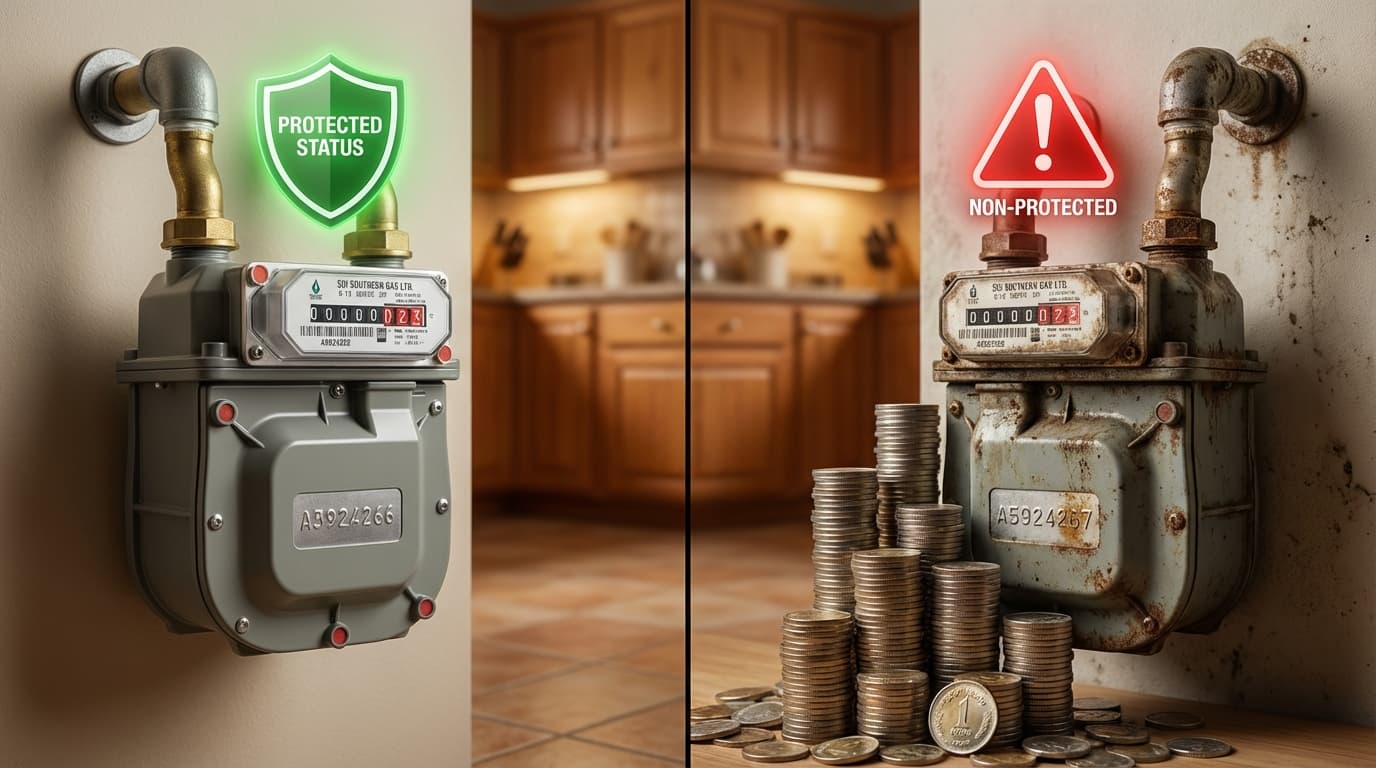
If you have compared gas bills with your neighbors recently, you might have noticed something confusing. One house pays Rs. 800, while the house next door with similar-looking usage pays Rs. 4,000. In many cases, the difference comes down to one label on the bill: "Protected" or "Non-Protected".
Quick Summary
- Protected consumers have lower gas rates and a lower fixed charge.
- Non-Protected consumers pay higher slab rates and higher fixed charges.
- The main threshold is an average of 0.9 hm3 or less during November to February.
- Your current summer usage alone does not decide your category.
Source check
Last checked: June 4, 2026. Domestic tariff amounts and category rules were checked against public SSGC, OGRA, and SNGPL tariff pages; always verify your latest bill and official notices.
Do you know your current status?
Don't wait for the paper bill. You can check your bill online, compare your fixed charge, or estimate your charges with our calculator.
The Golden Rule: 0.9 hm3
OGRA's domestic gas tariff uses a key threshold of 0.9 hm3 for the Protected category. If your average winter consumption is at or below 0.9 hm3, you fall into the lower-consumption Protected category.
In everyday bill language, people often describe this as roughly 90 meter units or cubic meters. That is a useful shortcut, but it should not be treated as exact bill math. Your final gas charges are calculated using energy units such as MMBTU, and those depend on factors like GCV and pressure adjustment.
How Winter Usage Determines Your Category
This is the part most people misunderstand. You don't become Non-Protected just because you used a little more gas in June or July.
SNGPL and SSGC look at your average consumption during the 4 winter months:
- November
- December
- January
- February
If the average across these months is 0.9 hm3 or less, you are treated as Protected. If the average goes above that threshold, you are treated as Non-Protected for the next cycle.
One high winter month does not automatically decide the category by itself. But if January is very high because of heavy heater or geyser use, it can still raise the overall 4-month average enough to move you into Non-Protected.
Simple Example
Suppose your winter usage looks like this:
| Month | Usage |
|---|---|
| November | 0.7 hm3 |
| December | 1.2 hm3 |
| January | 1.1 hm3 |
| February | 0.8 hm3 |
The average is 0.95 hm3. That is above the 0.9 hm3 limit, so this consumer would likely be treated as Non-Protected for the next cycle.
Price Difference: Why it Matters
The cost difference is not small. Protected consumers get lower slab rates and a lower fixed charge. Non-Protected consumers move into higher slab rates, and the fixed monthly charge can be much higher depending on monthly consumption.
| Feature | Protected | Non-Protected |
|---|---|---|
| Category basis | Winter average up to 0.9 hm3 | Above protected threshold |
| Gas rate | Rs. 200 - 350 per MMBTU | Rs. 500 - 4,200 per MMBTU |
| Fixed Monthly Charge | Rs. 600 | Rs. 1,500 up to 1.5 hm3; Rs. 3,000 above 1.5 hm3 |
| Meter rent | Rs. 40 per month | Rs. 40 per month |
These amounts match the current official domestic rates at the time of this update, but tariffs are subject to revision. Domestic consumers may also receive one preceding slab benefit under the tariff structure, except for consumers above 4 hm3. This can affect the final bill calculation, so the fixed charge is not the only number to check.
If your connection is billed under RLNG, especially for newer connections, pricing may differ from traditional system gas. Always check the tariff/category printed on your own bill.
What Happens If You Are Close to the 0.9 hm3 Limit?
If your winter average is very close to the 0.9 hm3 threshold, even a small increase in one winter month can move you into the Non-Protected category. This is why some households near the limit see unexpected category changes even though their usage does not feel very high.
Why You May Be Non-Protected Even With Low Usage
This is a common frustration. Someone checks the latest bill, sees low usage, and still finds Non-Protected written on the bill. That does not always mean the current bill is wrong.
- Your winter average may have been slightly above 0.9 hm3.
- One or two high winter months can raise the 4-month average.
- Estimated readings or delayed readings can make the bill look different from actual daily usage.
- Previous balance, adjustments, or minimum charges can also make the final payable amount look higher.
In short: your current usage matters for the current bill, but your Protected/Non-Protected category is mainly tied to the winter average review.
How Estimated Bills Can Affect Category Confusion
Estimated or adjusted readings can make winter usage harder to understand. If your meter was not read in a particular month, the company may issue an estimated bill. When actual readings are updated later, usage can be adjusted in the billing record.
That does not mean every estimated bill changes your category. It means you should check the corrected winter readings carefully, because the Protected or Non-Protected decision depends on the winter average shown in billing records.
How to Check If You Are Protected or Non-Protected
Open your latest SNGPL or SSGC bill and look for the consumer category, tariff, or fixed charge area. If the fixed charge is Rs. 600, you are most likely in the Protected domestic category. If it is Rs. 1,500 or Rs. 3,000, your bill is being treated under the Non-Protected domestic category.
You can also check your latest bill through our SNGPL bill checker or SSGC duplicate bill tool, then use the gas bill calculator to estimate how the tariff affects your charges.
Why This Matters for Your Summer Gas Bill
Many consumers only notice the problem in summer because their gas usage drops, but the bill still does not feel low. That usually happens because fixed charges, meter rent, tax, and any previous adjustments can still apply even when current usage is small.
If your summer bill looks unusually high, read our detailed guide on why gas bills stay high in summer. That article explains fixed charges, estimated bills, combined readings, and other common causes.
Can You Request a Category Change?
Usually, no. Protected or Non-Protected status is automatically determined from your winter consumption average. You cannot manually apply to switch from Non-Protected to Protected just because your current month is low.
If your bill seems wrong because of a reading mistake or adjustment, you can contact the company for correction. But if the winter average is genuinely above the protected limit, the practical way back is to keep the next winter average within the threshold.
How to Stay in the Protected Category
If you are currently Non-Protected, you usually cannot change the category immediately. The practical goal is to manage your usage during the next November to February review window.
- Track your monthly consumption during winter instead of waiting for the season to end.
- Limit unnecessary gas heater use, especially during long overnight hours.
- Turn off geysers when not needed and fix leaks quickly.
- Try to keep your winter average at or below 0.9 hm3.
If your winter average comes back within the Protected limit, your category should be reviewed in the next cycle. Keep your bills and readings saved so you can follow the pattern yourself.
Official References
Tariffs and categories can change, so always treat your latest bill and official notifications as the final source.
Related reading
Why Gas Bills Stay High in Summer
See how fixed charges and category status can keep bills high even when current usage looks low.
SNGPL Bill Check Online
Open the official SNGPL bill page and compare your category and fixed charges with the latest bill.
SSGC Bill Check Online
Open the official SSGC bill page and verify whether the bill is being treated as protected or non-protected.
Gas Bill Calculator
Estimate your charges and understand how slab rates and fixed charges affect the total amount.
Frequently Asked Questions (FAQs)
How many units is 0.9 hm3?+
Why am I Non-Protected even though my current usage is low?+
Can one high winter month make me Non-Protected?+
If I save gas in March, will I become Protected?+
Can I request SNGPL or SSGC to change my category?+
Does this apply to both SNGPL and SSGC?+
How do I check if I am currently Protected?+
Shahzaib Qureshi
Shahzaib Qureshi is the public editorial name for SuiGas.com.pk. The site publishes practical, source-backed guides to help Pakistani consumers understand SNGPL and SSGC bills, tariff changes, duplicate bill access, payment options, and common billing issues. SuiGas.com.pk is independent and is not affiliated with SNGPL, SSGC, OGRA, or any government department.