Gas Compressor Use in Pakistan: Why It Is Dangerous and Illegal
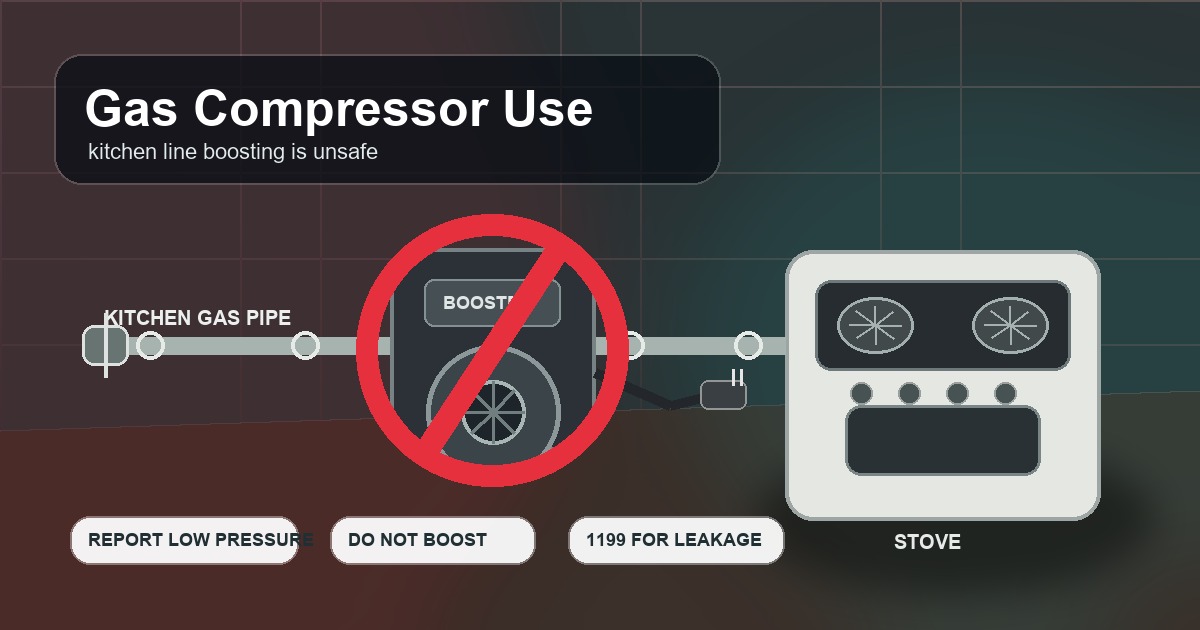
When gas pressure is low and the stove barely lights, a compressor can look like an easy shortcut. It is not. A private gas compressor pulls pressure toward one house, makes life worse for nearby homes, and adds safety risks that are not worth a faster cup of tea.
This guide explains why domestic gas compressor use in Pakistan is unsafe, unfair, and legally risky, plus what SNGPL and SSGC consumers should do instead when pressure is weak.
Source check
Last checked: June 28, 2026. This article uses official SNGPL complaint categories including gas theft, violation of contract, low pressure, gas leakage, fire case, and blast; SSGC safety, important number, complaint timeline, FAQ, and gas theft/disconnection pages; and SNGPL's methane safety document. Company action in a specific case depends on the gas company's inspection and official rules.
Quick Answer
Do not use a gas compressor at home to fix low gas pressure. It is unsafe, unfair to neighbors, and can be treated as unauthorized use or a violation issue by the gas company. If pressure is low, complain through the official SNGPL or SSGC channel instead of boosting the line privately.
The short version
- A compressor can pull gas away from nearby homes.
- It can create leakage, appliance, fire, and blast risk.
- It can draw attention as gas theft or violation of contract.
- It does not solve the area supply problem; it only shifts the problem.
- If you smell gas, call 1199 before doing anything else.
If the problem is normal low pressure without gas smell, use the no gas or low pressure complaint guide. If there is smell, leakage, hissing, fire, or a serious escape, read the gas leakage emergency guide and call the emergency channel first.
What Is a Gas Compressor?
In household language, a gas compressor or gas booster is a machine people usually attach on the indoor kitchen or appliance gas line, often near the pipe feeding a stove, heater, or geyser. It is normally not something installed at the official gas meter. Some people call it a compressor, pump, booster, or pressure machine.
This article is not a buying guide and not an installation guide. There is a reason for that: the safe advice for domestic consumers is not "buy a better compressor." The safe advice is do not use one.
| People may call it | What it tries to do | Why it is a problem |
|---|---|---|
| Gas compressor | Pull stronger gas flow into one house | Can reduce pressure for others and create safety risk |
| Gas booster | Boost flame during low-pressure hours | Can mask a real supply, regulator, or network complaint |
| Gas pump | Force gas toward an appliance | Can be treated as unauthorized interference with gas supply |
Why People Use Gas Compressors During Low Pressure
Most people do not start with bad intentions. They are tired of low flame, late dinners, cold water, or winter pressure drops. A neighbor says, "compressor laga lo, masla khatam." That advice sounds practical because it gives one house quick relief.
The problem is that it is a selfish fix. Your stove may improve, but the pressure around you can become worse. If several homes on the same lane start using compressors, the whole area can turn into a pressure fight.
Low pressure is a service problem. A private compressor turns it into a safety and neighbor problem.
Why Gas Compressors Are Dangerous
Natural gas is not something to experiment with. A compressor adds moving parts, electricity, suction, vibration, and extra fittings near a fuel line. That is already a bad combination inside a home.
Safety risks
- Leakage from weak joints, rubber pipes, or fittings.
- Fire or spark risk near an electric machine.
- Unstable flame on stoves, heaters, and geysers.
- Damage or stress to customer-side piping.
- False confidence when a real leak or pressure issue needs reporting.
What not to do
- Do not attach a booster to the kitchen, stove, geyser, or appliance gas line.
- Do not run an electric machine near suspected leakage.
- Do not ask an unverified person to modify gas piping.
- Do not hide a compressor if the company visits.
- Do not ignore gas smell after pressure changes.
SSGC tells customers to report gas leakage immediately at 1199, and its official timelines treat serious escape, fire, blast, and leakage as urgent categories. That is the world a compressor belongs to: not convenience, but risk.
Why It Is Unfair to Neighbors
Gas pressure in a lane or building is shared. When one consumer forcefully pulls more gas, nearby homes can get weaker pressure. That means one person's shortcut can move the inconvenience to someone else's kitchen.
This is why compressor use often creates neighborhood conflict. The homes without compressors feel punished for following the rules. The homes with compressors may feel they are only surviving low pressure. Both sides are dealing with the same shortage, but the compressor makes it less fair.
| For the compressor user | For neighbors | For the area |
|---|---|---|
| Temporary stronger flame | Weaker flame or no gas | More complaints and tension |
| Higher safety and inspection risk | Pressure drops at peak hours | Harder to identify real network faults |
| Possible disconnection or penalty issue | Unfair service experience | More people tempted to copy the behavior |
Legal, Complaint, and Disconnection Risk
A household gas connection is not a blank permission to alter the supply system. If a consumer installs equipment that interferes with the gas line, the company can treat it as a serious violation depending on what its team finds.
SNGPL's official complaint form includes categories such as Gas Theft / Violation Of Contract, gas leakage, fire case, blast, low pressure, and related service issues. SSGC also publishes gas theft and disconnection updates on its official site. These are not casual labels. They show that unauthorized gas use and interference can become an enforcement matter, not just a neighbor dispute.
Do not assume that "everyone in the area uses one" protects you. If there is a leak, inspection, complaint, accident, or disconnection drive, the device can become evidence that your connection was being misused.
Plain-language rule
If gas pressure is low, report the pressure issue. Do not modify the gas line to overpower the problem.
What to Do Instead of Using a Compressor
The better response depends on whether the problem is only your home or the whole area. Start by checking safely, not by changing equipment.
- Ask one or two nearby homes whether their gas pressure is also low.
- Check whether the issue happens only at peak cooking hours or all day.
- Look for visible meter, regulator, or valve damage without touching sealed parts.
- Keep your consumer number for SNGPL or customer number for SSGC ready.
- File a low pressure or no gas complaint through the official channel.
- If there is gas smell, leakage, hissing, fire, or blast risk, call 1199 first.
If you need step-by-step help, use our no gas or low pressure complaint guide. For official complaint filing and tracking, read the SNGPL and SSGC complaint online guide.
What If a Neighbor Is Using a Gas Compressor?
This can become emotional quickly because everyone is frustrated. Still, the safest approach is not a fight at the gate. Do not enter anyone's home, kitchen, meter area, or property, and do not touch another person's gas connection.
Keep a simple record instead: dates, times, when your pressure drops, whether nearby homes have the same issue, and whether the problem becomes worse at certain hours. Then use the official complaint channel and describe the pressure pattern. If you clearly suspect unauthorized equipment, say that calmly.
Useful complaint wording
"Gas pressure in our lane becomes very low during peak hours. Several homes are affected. Please inspect the area for low pressure and any unauthorized gas boosting or line interference."
What If You Already Have a Gas Compressor?
The honest answer is simple: stop using it. Do not keep running it because "bas thori dair ke liye." The risk is not only the machine itself, but the fittings, line condition, electric connection, and pressure changes around it.
If you need it removed, use a qualified gas/plumbing professional for customer-side work and do not let anyone alter company-side equipment, meter seals, or the official regulator. If you smell gas at any point, treat it as leakage and call the emergency channel.
After removing the device, file the actual problem as a low pressure complaint. That gives you a proper record and avoids turning a service problem into a violation problem.
Official References
These official pages were checked while preparing this guide:
Frequently Asked Questions
Is a gas compressor illegal in Pakistan?
For domestic consumers, a private compressor should be treated as unauthorized and risky. It can be handled as misuse, gas theft, violation of contract, or a disconnection matter depending on the gas company's inspection and official rules.
Can a gas compressor damage my appliances?
It can create unstable pressure and unsafe operating conditions around appliances, fittings, pipes, and regulators. If appliances behave unusually, stop using unsafe equipment and file the proper complaint.
What should I do if pressure is low every evening?
Note the timing, ask nearby homes if they have the same issue, and file a low pressure or low pressure area complaint with SNGPL or SSGC. Do not install a compressor to overpower the network.
Should I report a neighbor's gas compressor?
If you suspect unauthorized boosting is affecting pressure or safety, report the issue through the official complaint channel. Avoid confrontation and do not touch another person's gas connection.
Should I call 1199 for compressor use?
Call 1199 immediately if there is gas smell, leakage, fire, blast, or immediate safety risk. For normal low pressure or suspected unauthorized use without emergency danger, use the official complaint route and keep your complaint number.
Related reading
No gas or low pressure guide
Use this instead of trying to boost gas supply privately.
Gas leakage emergency guide
Know what to do before calling 1199 when gas smell or leakage appears.
Complaint online guide
Register, track, and follow up on official SNGPL or SSGC complaints.
Helpline directory
Find emergency, complaint, and regional contact guidance.
About the author
Shahzaib Qureshi is the public editorial name for SuiGas.com.pk. The site publishes practical, source-backed guides to help Pakistani consumers understand SNGPL and SSGC bills, tariff changes, duplicate bill access, payment options, and common billing issues. SuiGas.com.pk is independent and is not affiliated with SNGPL, SSGC, OGRA, or any government department.